Every year we get the same emergency calls. The rain starts, water shows up somewhere it shouldn’t, and everyone wants it fixed immediately. The truth is, once it’s raining, it’s already the worst possible time to waterproof anything — materials need dry weather and time to set properly, and rushed repairs rarely hold. The real work happens in the months before monsoon, while there’s still time to do it properly. Here are five signs worth checking now.
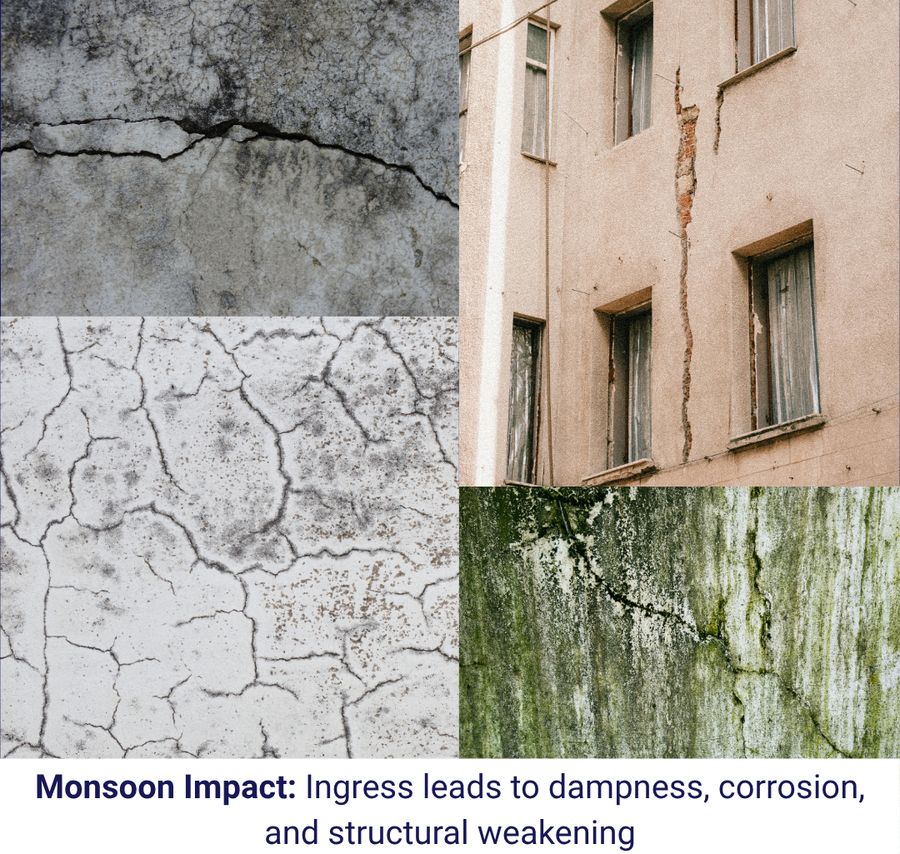
Sign 1 — Cracks on Walls or Roof
Monsoon impact: Water gets into the crack, then into the structure itself — leading to dampness, corrosion of the steel inside, and gradual weakening.
Even a hairline crack is worth a second look, especially if it seems to be growing. Cracks are one of the most direct paths for water to get into a structure, and once it does, the damage compounds year after year.
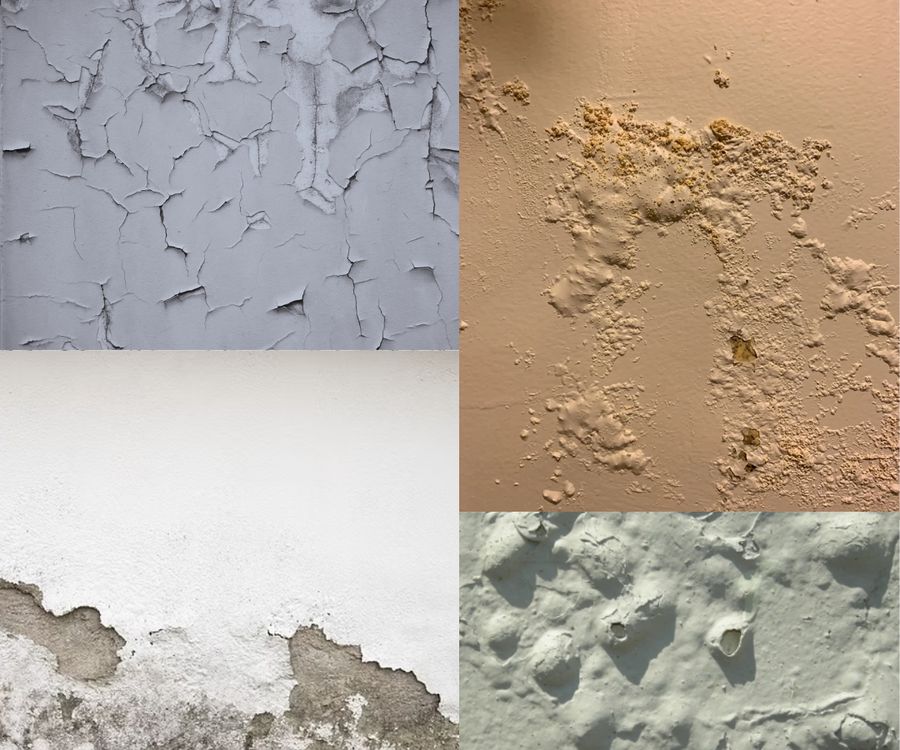
Sign 2 — Peeling Paint or Wall Bubbling
Monsoon impact: Usually means moisture is already trapped behind the surface — left alone, it leads to mold, fungal growth, and indoor air that’s genuinely unhealthy to be around.
Paint doesn’t peel or bubble on its own — it’s almost always a sign that water has gotten in behind it. By the time you can see it on the surface, the moisture has usually been there a while.
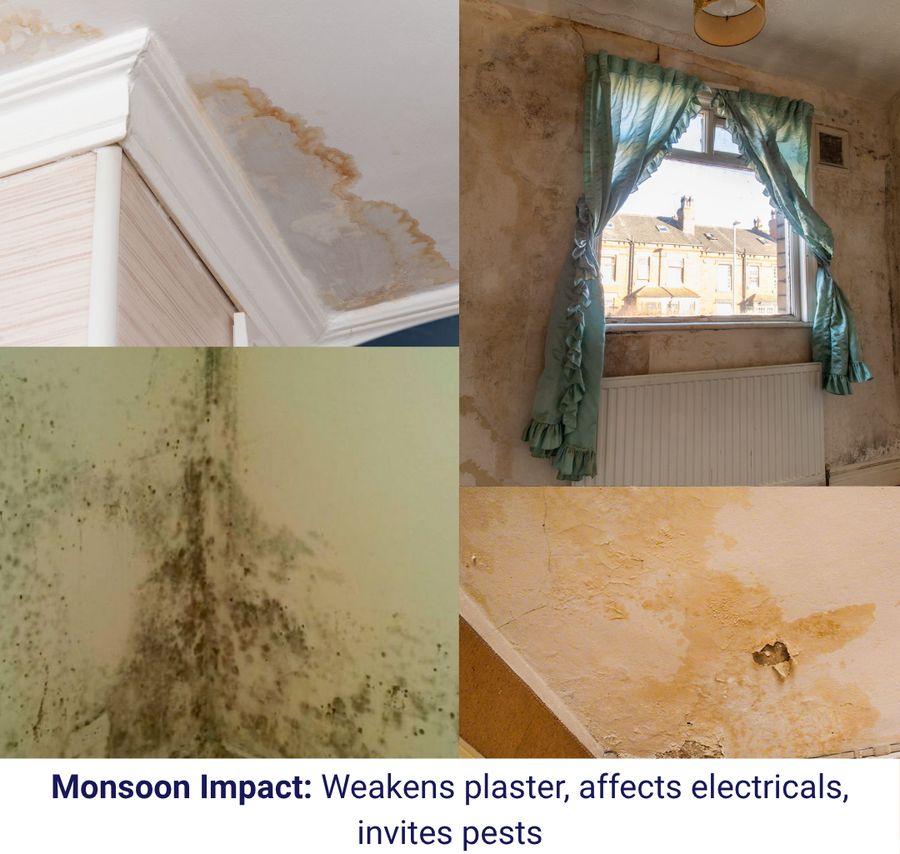
Sign 3 — Damp Patches or Musty Odor
Monsoon impact: Weakens plaster, can affect electrical wiring run through walls and ceilings, and creates the damp conditions pests are drawn to.
A musty smell or a damp patch that won’t fully dry, even between rains, usually means there’s an ongoing source of moisture rather than a one-time spill. Worth tracing to the source before it spreads further.
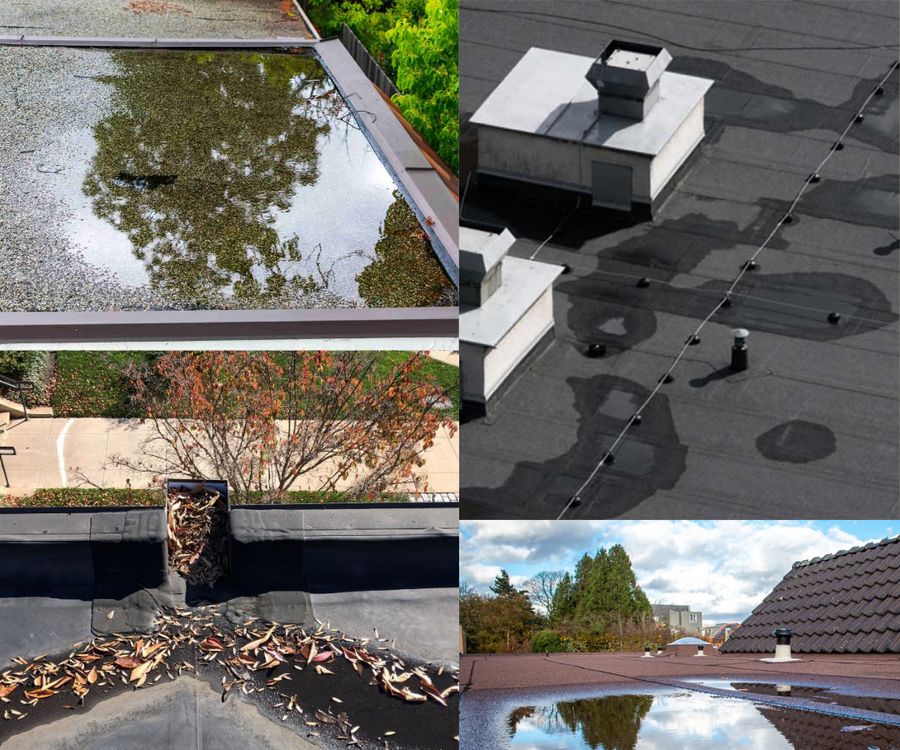
Sign 4 — Improper Slope or Clogged Outlets
Monsoon impact: Water pools instead of draining away, and standing water finds its way into the structure below over time.
A lot of ‘waterproofing failures’ are actually drainage problems. If your terrace doesn’t slope properly toward the outlet, or the outlet itself is blocked with leaves and debris, water sits exactly where it shouldn’t — and eventually it finds a way in.
Sign 5 — Basement or Bathroom Seepage
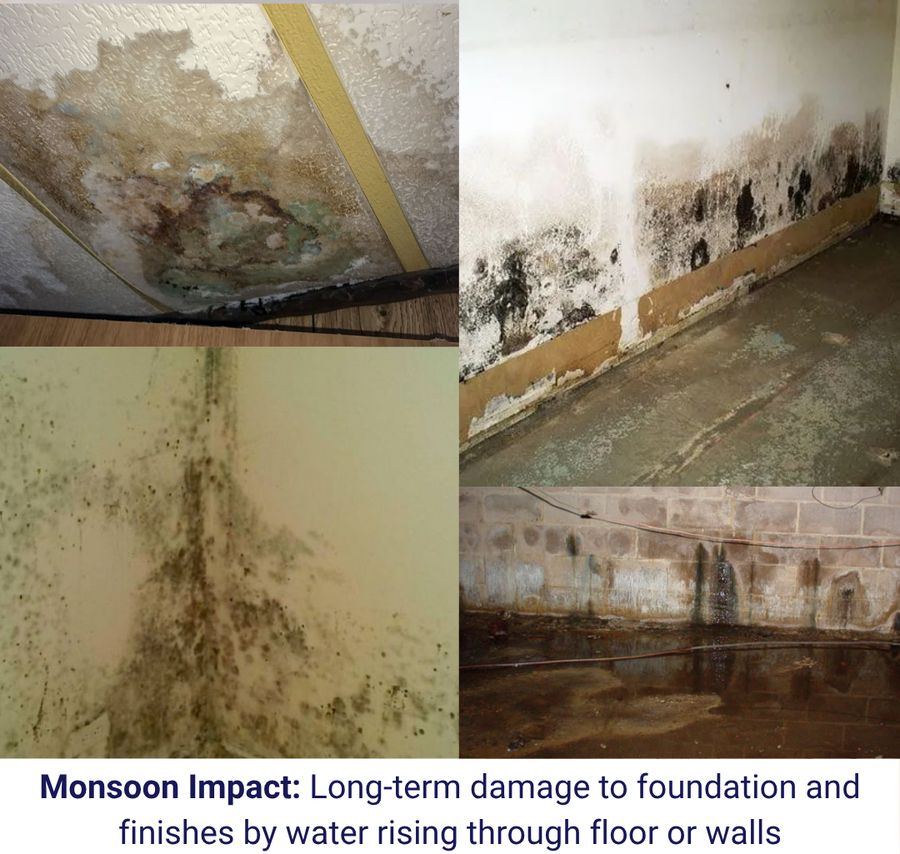
Monsoon impact: Left unaddressed, this causes long-term damage to the foundation and finishes as water keeps rising through the floor or walls.
Basements and bathrooms are two of the most common places for water to seep in through the floor or lower walls, and because they’re often out of daily sight, the damage can go unnoticed for a long time. Regular checks matter here more than almost anywhere else.
A building that gets through monsoon without a single leak usually isn’t the one with the most expensive waterproofing job — it’s the one where someone checked it properly while there was still time to fix what needed fixing.
If any of these five signs look familiar, this is the window to get it checked — not the week after the first big rain.